












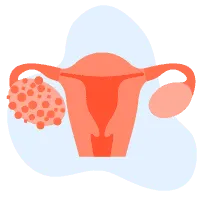











Although taking up only about 3% of cancers among women, ovarian cancer has a high rate of fatality compared to other types of cancer of the female reproductive system; in part, because it shows minimal symptoms until it is highly advanced and because of a lack of accurate screening tests for it. One of the risk factors is related to a woman’s pregnancy history.

Jaminan Produk Asli 100%
Are Women Who Choose to Not Be Pregnant Exposed to Higher Risk of Ovarian Cancer?

How does reproductive history influence the chance of getting ovarian cancer?
Many studies have shown that women who have no children or give birth at an advanced age are at slightly higher risk of ovarian cancer, although the number is quite small. Women who have been pregnant and carried it to term before age 26 have a lower risk of ovarian cancer than women who have not. The risk goes down with each full-term pregnancy. Women who have their first full-term pregnancy after age 35 or who never carried a pregnancy to term have a higher risk of ovarian cancer.
It is hypothesized that the more a woman is exposed to estrogen in her life, the higher her risk of ovarian cancer. Childbearing is considered “protective” because effectively it gives the woman a nine-month break from ovulation/estrogen exposure during pregnancy. Moreover, the chance of getting ovarian cancer reduces even more so if she chooses to breastfeed. Another hypothesis is that when a women ovulates, the reparation of the corpus luteum (the cyst from which the egg is expelled) can cause some genetic mutations that can lead to ovarian cancer.
Other risk factors of ovarian cancer
Ovarian cancer is linked to many factors. Firstly, women undergo menopause after 50 (and thus have longer estrogen exposure) and those older than 63 are more likely to develop ovarian cancer. Furthermore, obese women (body mass index > 30) are at higher risk as their adipose (fat) tissue can be converted to extra circulating estrogen in their bodies. The risk of cancer also declines after 3 to 6 months of oral contraceptive usage (progestin only).
Last but not least, genetics also plays a role in ovarian cancer (the possibility can come from both the maternal and paternal side). Even a strong family history of breast or colorectal cancer can be related to increasing the risk of ovarian cancer since an inherited mutation in specific genes is the mutual cause of all these kinds of cancer.
If you have concerns regarding your risk of ovarian cancer please contact your doctor.
Hello Health Group does not provide medical advice, diagnosis or treatment.
Penafian
Hello Health Group tidak menawarkan nasihat perubatan, diagnosis atau rawatan.
What are the risk factors for ovarian cancer? http://www.cancer.org/cancer/ovariancancer/detailedguide/ovarian-cancer-risk-factors. Accessed August 11, 2016.
Risk factors. http://www.ovariancancer.org/about/risk-factors/. Accessed August 19, 2016.
Progestin-Only Hormonal Methods (Mini-Pills, Implants, and Shots). http://www.webmd.com/sex/birth-control/progestin-only-hormonal-methods-mini-pills-shots. Accessed August 19, 2016.
About Ovarian Cancer. http://www.hopkinsmedicine.org/kimmel_cancer_center/centers/ovarian/about/risk_factors.html. Accessed August 11, 2016.
Versi Terbaru
08/12/2019
Ditulis oleh Tran Pham
Diperbaharui oleh: Nurul Nazrah Nazarudin


 Iklan
IklanAdakah artikel ini bermanfaat?
IklanIklan