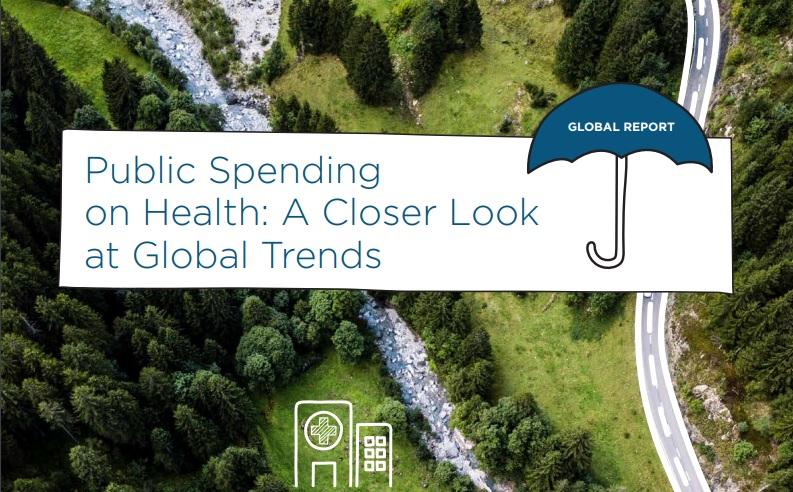



























En route to universal health coverage, the World Health Organisation this week, released some findings from their new report on global health expenditure entitled, ‘Public Spending on Health: A closer look at global trends’. It is worth noting that health spending is made up of government expenditure, out-of-pocket payments (people paying for their own care), and sources such as voluntary health insurance, employer-provided health programmes, and activities by non-governmental organizations.
The Rise Of Middle And Low Income Countries
What the report found was that spending on health care has increased at faster rate than the global economy with the overall global spending on health is estimated to be 10% of the total global gross domestic product (GDP). This is particularly true for low- and middle-income countries where health spending is growing on average 6% annually compared to 4% in high-income countries.
Upon dissecting these figures, we also learned a new trend – There is an increase in domestic public funding for health in low- and middle-income countries and declining external funding in middle-income countries. Reliance on out-of-pocket expenses is also declining around the world, albeit slowly. The gradual centralisation of health spending also found that the growth in spending is concomitant with the rise of the size of the economy. In middle income countries, the average spending per capita has doubled since the year 2000 with the average per capita spending of RM 240 (USD 60) for lower-middle income countries and an average of RM 1080 (USD 270) per capita for upper-middle income countries.
Why Are We Still Paying A Lot?
What we can be happy about is that health system that rely more on public spending provides better financial protection and better coverage on essential services. Such a trend is also good as it is in line with the sustainable development goals and universal health coverage. However, while these numbers seem to reflect massive development and improvement, there are still ways on making health care more accessible and equitable for all and that has something to do with the efficiency and allocation of public spending matters.
When government spending on health increases, people are less likely to fall into poverty seeking health services. But government spending only reduces inequities in access when allocations are carefully planned to ensure that the entire population can obtain primary health care. In low- and middle-income countries, new data suggest that more than half of health spending is devoted to primary health care but less than 40% of all spending on primary health care comes from governments.
In low income countries especially, external funding is still crucial despite it being reduced to less than 1% of global health expenditure. They still rely on external funding for immunisation and responds towards pandemic and nearly 50% of external funding to low and middle income countries has been devoted to 3 diseases, Tuberculosis, HIV/Aids and Malaria.
In the spirit of the the 40 years anniversary of the Alma Ata declaration and the recent Astana declaration, the WHO report points to ways that policy makers, health professionals and citizens alike can continue to strengthen health systems.
“Increased domestic spending is essential for achieving universal health coverage and the health-related Sustainable Development Goals,” said Dr Tedros Adhanom Ghebreyesus, WHO Director-General. “But health spending is not a cost, it’s an investment in poverty reduction, jobs, productivity, inclusive economic growth, and healthier, safer, fairer societies.”
Hello Health Group does not provide medical advice, diagnosis or treatment.